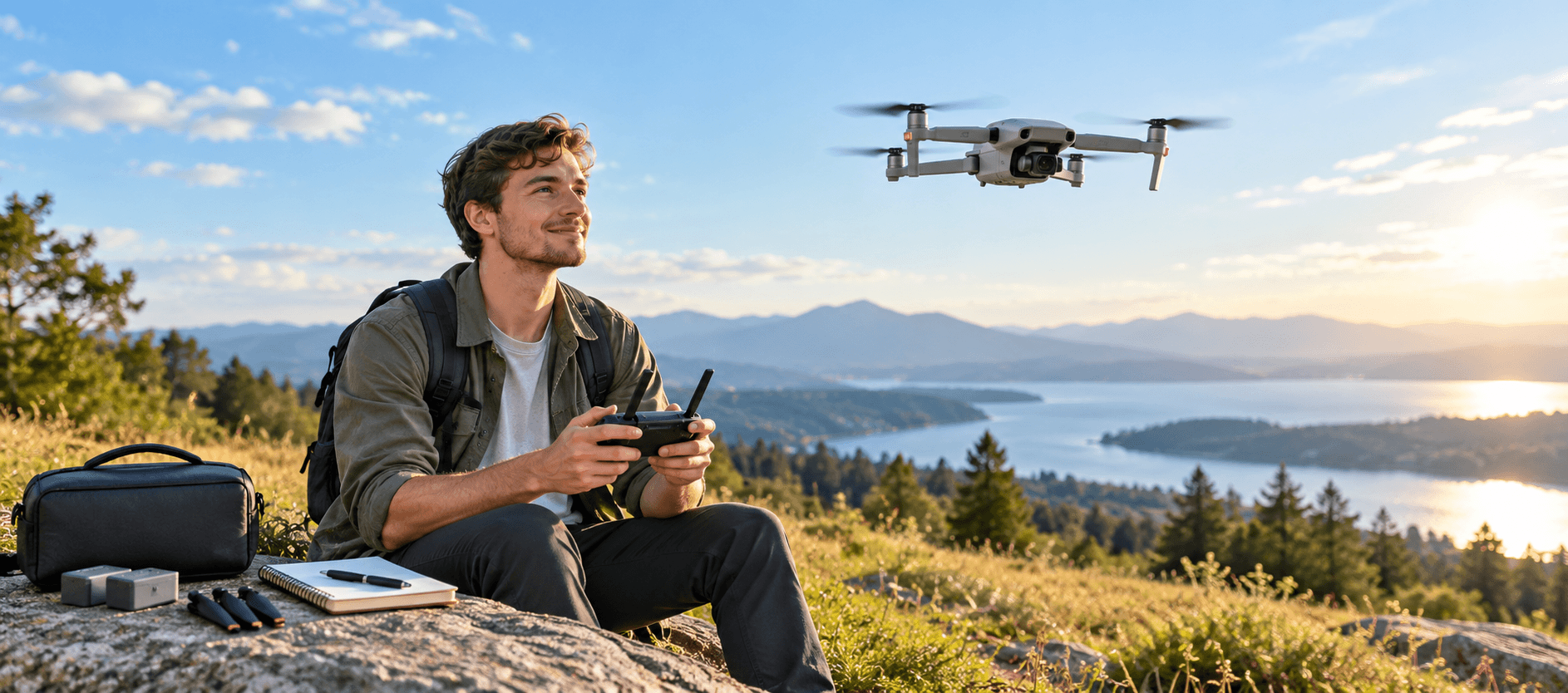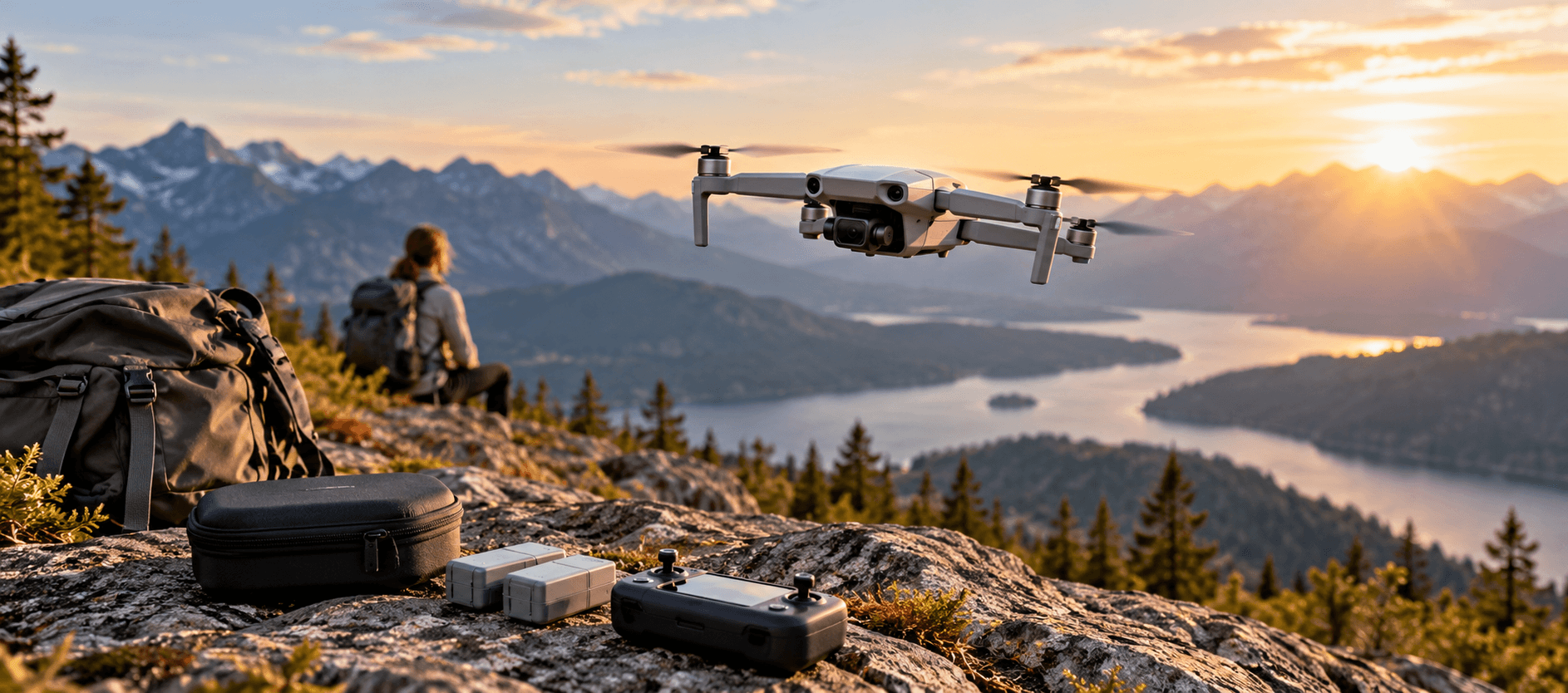
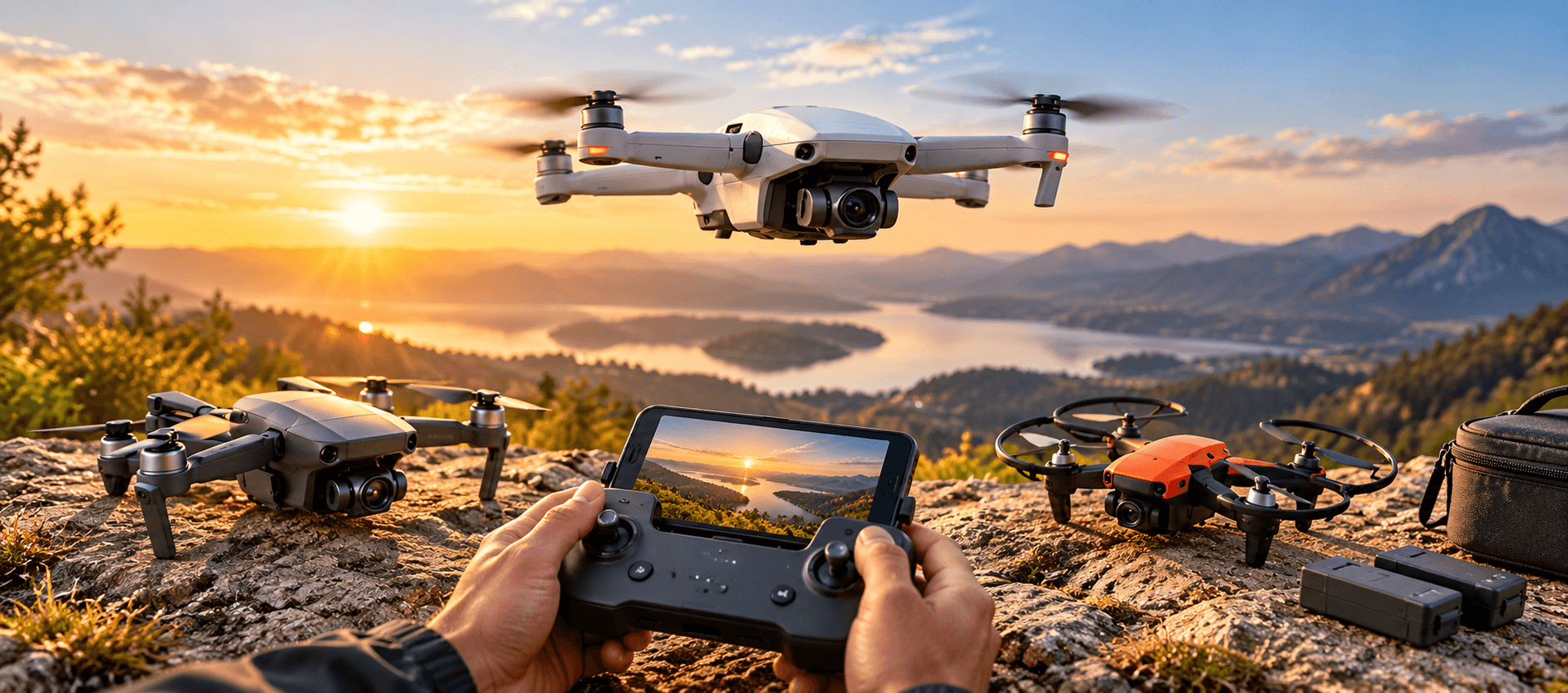
The best beginner drone is usually a compact aircraft with predictable hovering, gentle beginner controls, clear battery warnings, and a recovery feature you understand. A GPS-assisted camera drone suits someone learning conventional piloting; a guarded compact drone reduces exposed-propeller contact risks; and a hands-free tracking drone suits short self-filming clips. These choices serve different goals, so ease of recording is not the same as ease of learning to fly. Compare total kit cost, spare parts, safety limitations, and local flight rules before deciding.
What Makes a Drone Easy for First-Time Pilots?
A beginner-friendly drone should remain manageable when a flight becomes confusing. Stable hovering helps you pause while learning orientation. Low-speed limits, visible battery alerts and a dependable connection reduce avoidable surprises.
Return to Home helps only when its position and settings are correct. Propeller guards and obstacle sensors may assist, but neither replaces open-space practice or a preflight check. Before choosing a drone, inspect the controller layout, battery warning display and emergency landing instructions in its manual, not just a store listing.
Best Beginner Drone Types in 2026: Quick Comparison
| Drone type | Best beginner use | Main benefit and limitation |
| GPS-assisted camera drone | All-round outdoor learning | Stable hovering and possible Return to Home; not every model avoids obstacles |
| Guarded compact drone | First short flights | Less exposed propeller contact; guards do not make indoor flight risk-free |
| Hands-free tracking drone | Solo clips and self-filming | Automated framing; limited manual-skill development and possible tracking failures |
| Budget stick-control trainer | Learning directional control | Accessible practice; fewer recovery or camera features on some models |
| Immersive 360-degree drone | Creative reframing | Capture viewpoints after landing; goggles, editing and safety add complexity |
These categories overlap. Check the specific aircraft's controls, accessories, limitations and manual.

Best Drone Types for Complete Beginners
1. GPS-Assisted Camera Drones: Best All-Round Starting Point
GPS-assisted hovering and a physical controller offer an approachable outdoor starting point. Practice turns, altitude changes and framing while the drone holds position. Look for beginner speed limits and a clearly explained Return to Home mode. GPS may be unreliable indoors or near obstructions, and position holding cannot prevent collisions. For travel, check the aircraft's weight, launch restrictions and how quickly it can establish a safe Home Point at a new location.
2. Propeller-Guarded Compact Drones: Best for Gentle First Flights
A lightweight drone with guards can make short sessions less intimidating by reducing exposed-propeller contact. Guards do not prevent every injury or crash. Prioritize low-speed control over advertised top speed. Wind can push very light aircraft off course; indoors, avoid people, pets and furniture. Practice only where the manual and local rules permit. Check the recommended wind range and do not assume guards can protect the camera, motors or bystanders from every impact.
3. Hands-Free Tracking Drones: Best for Simple Self-Filming
Some small drones use app or palm-based launch and automatic framing. That simplifies short travel clips without joystick practice. However, tracking can lose a subject or miss obstacles. Confirm how to stop or land immediately and whether a physical controller is included. This type is useful for convenient filming, not for learning precise manual piloting. Self-filming still needs active supervision: rehearse what happens when the subject leaves the frame or suddenly changes direction, and stop filming when a route becomes crowded.
4. Budget Stick-Control Trainers: Best for Building Real Flight Skills
A basic controller drone teaches orientation, gentle inputs and deliberate landing. Prioritize available batteries, replacement propellers and a clear manual. Cheap trainers may lack GPS holding, obstacle sensing or camera stabilization and drift in wind. They can be suitable practice tools when their limits are understood. Visible front-and-back orientation cues and an easy-to-change battery help beginners. Without automatic hovering, wait for especially calm conditions until basic steering becomes predictable.
5. Immersive 360-Degree Drones: Best for Specialized Creativity
A 360-degree drone records views around it for reframing afterward. It offers creative flexibility but may require goggles, motion controls and extra editing. Point-to-fly operation does not automatically make it the easiest first aircraft. If goggles block direct sight, a co-located observer can help meet U.S. visual-line-of-sight rules. Consider it a specialty option. Its spherical resolution is not directly comparable with conventional flat video. The final result depends on reframing decisions and editing time as much as the recording specification.

Easiest Drone Controls and Safety Features
Simple Controls Versus Learning to Pilot
Palm launch and automatic framing reduce filming steps but do not teach steering or landing. A controller builds those skills. If you want both, look for assisted shooting alongside conventional controls. Learn pause, land and emergency-stop procedures before takeoff. If an app or phone controls flight, check how the aircraft responds to a lost connection and whether that behavior is configurable.
Obstacle Sensing, Propeller Guards and Return to Home
Obstacle sensing may miss thin wires, branches, reflective surfaces or hazards outside its coverage. Guards are not crash-proof. Return to Home depends on settings, position and battery level, and its path may cross obstacles. Confirm the Home Point, return altitude and low-battery behavior before flight.
Can a Beginner Capture Cinematic Video?
Yes. Start with stable hovering, one slow movement and a gentle turn or camera tilt. Frame one clear subject rather than combining difficult maneuvers. Stabilized footage often looks better than shaky high-resolution video. Safe control comes first.
First-Flight and Buying Checks in the United States
For recreational flying, the Federal Aviation Administration (FAA) requires the free TRUST safety test and proof of completion. Drones weighing 250 grams or more generally require registration; the exception for lighter aircraft applies only to qualifying recreational operations. Registered drones generally must meet Remote ID requirements unless an exception applies. The rules for non-recreational flying differ.
Maintain visual line of sight or meet co-located observer requirements. Yield to aircraft, check airspace restrictions and obtain controlled-airspace authorization when needed. Recreational Class G flights are generally limited to 400 feet above ground level.
Compare total cost: controller, batteries, charger, spares and support. Check availability and the manual, not just a low advertised price.
Which Beginner Drone Type Should You Choose?
For outdoor practice and photographs, choose GPS-assisted camera controls. For low-speed training, consider guarded compact or stick-control trainer types. For quick solo clips, consider hands-free tracking. For immersive footage, a 360-degree drone is a specialist choice. Compare camera stabilization and actual safety limits in every category.
Conclusion
The best beginner drone is the one you can operate safely and confidently for your actual purpose. Match control style, recovery features and camera needs, then verify the manual and flight rules. Practice matters more than a long specification sheet.
For more beginner-focused advice, explore our Beginner Drone Guides.
Frequently Asked Questions
What is the best beginner drone for someone who has never flown before?
Look for a compact drone with stable hovering, a gentle beginner setting, battery alerts and straightforward recovery instructions. A GPS-assisted camera type is a versatile choice for outdoor learning, while a guarded compact type may help with controlled short flights. No feature replaces safe practice.
Which beginner drones have the easiest controls and learning curve?
Hands-free tracking types usually simplify filming, while GPS-assisted controller drones can make hovering and steering more predictable. For someone learning actual piloting, the easiest interface is the one that allows slow movements, clear orientation and easy landing—not merely automatic video capture.
What's a good first drone for someone new to this?
Decide whether your first goal is learning to steer or getting footage. Choose a controller-based trainer or GPS-assisted camera drone for piloting practice, and consider a compact automated type for occasional self-filming. Confirm parts, controller inclusion and local flight rules before purchasing.
Can a beginner film cinematic shots with a drone?
Yes. Film in good light, hold a stable hover, use one smooth camera movement at a time and keep a safe distance from obstacles. A stabilized camera and thoughtful framing usually matter more than chasing the highest advertised resolution. Begin with simple shots before trying tracking moves.
Do beginner drones need obstacle avoidance?
Not always. Obstacle sensing can be valuable assistance, especially near complex surroundings, but its direction and reliability vary. A drone without it can still be suitable for careful training in a permitted open area. Treat sensors as backup, not permission to fly near people or barriers.