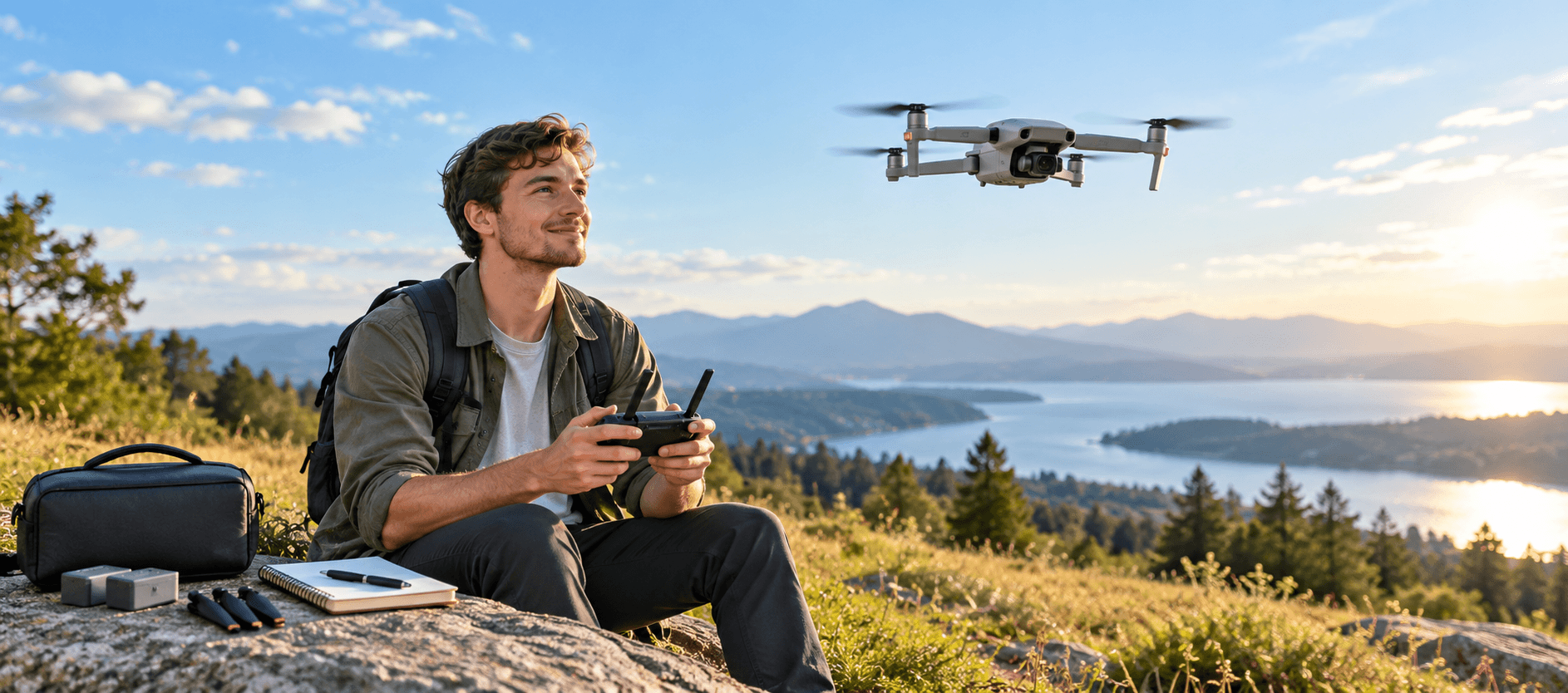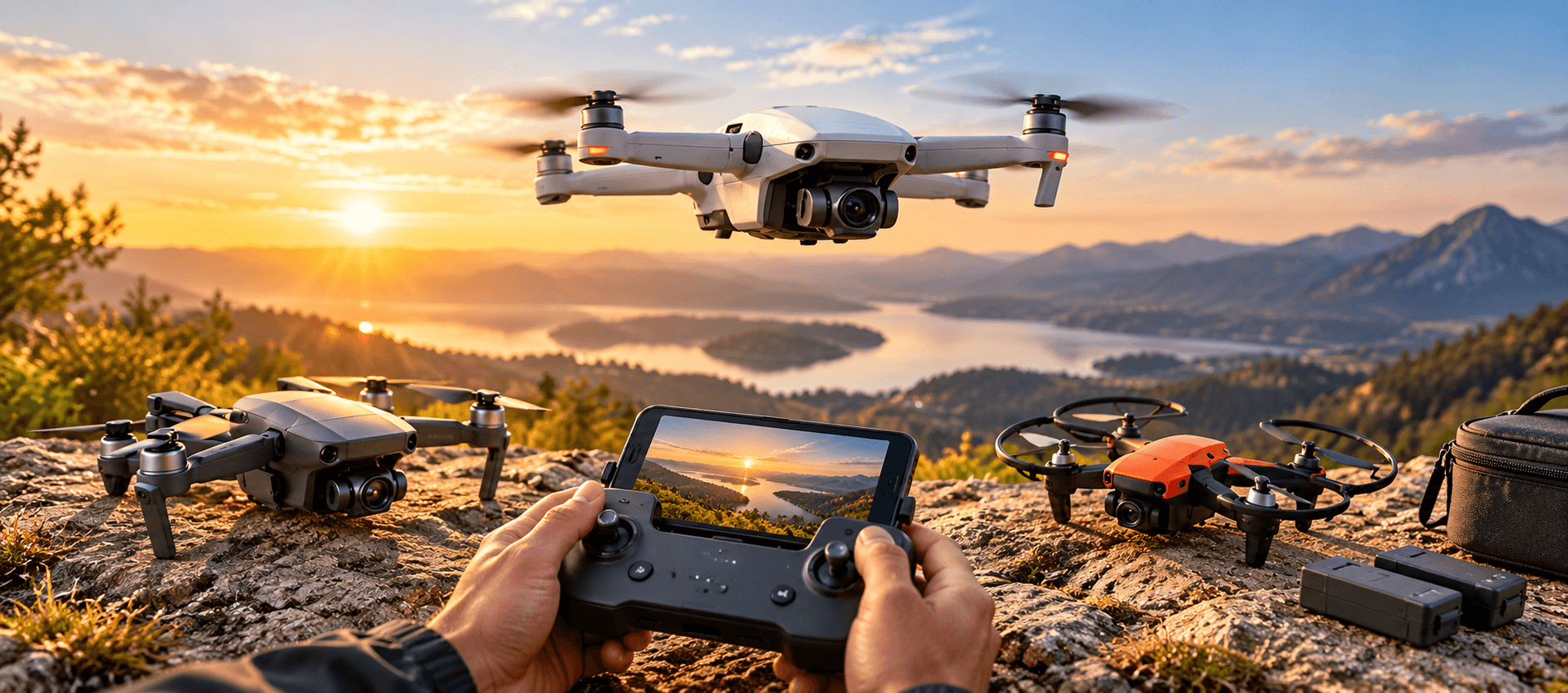
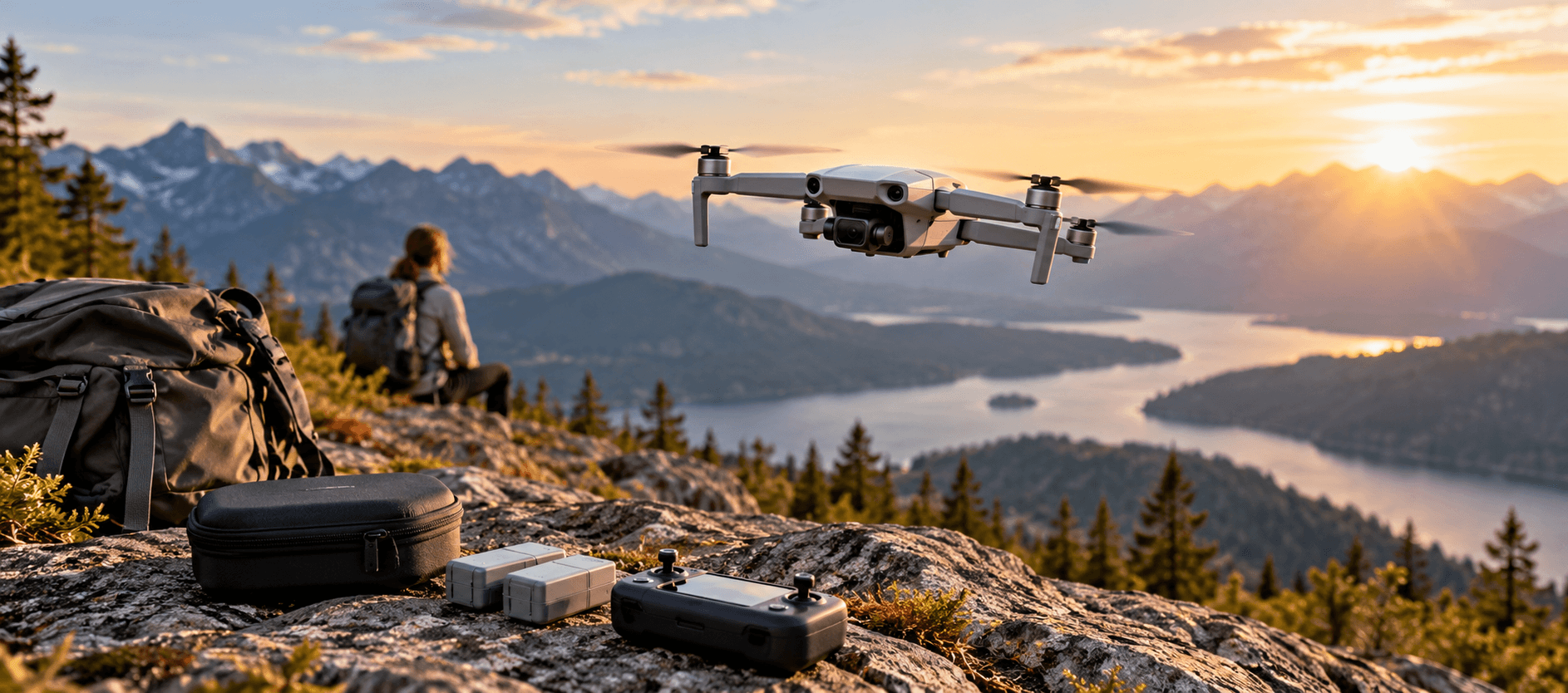
The best drone for hiking and backpacking is the one that fits your trip, not just the one with the smallest body or the longest spec-sheet flight time. For many hikers, a compact foldable drone under 250 g is a practical starting point because it reduces pack weight while offering useful camera and flight features. Wind handling, full-kit weight, and local flight rules still matter.
If your trips are long and gear-heavy, prioritize packed size, battery planning, and wind stability. If you care most about mountain landscapes, compare image quality and low-light performance first. If you mainly want trail clips of yourself, a lighter model with reliable tracking may be worth comparing earlier than a camera-first option. For a broader checklist, browse our Beginner Drone Guides.
What Makes a Drone Good for Hiking?
A good hiking drone has to work in real outdoor conditions, not just on a spec sheet. Total carry weight matters because the drone, batteries, controller, charger, and case all ride in your pack. Fast setup matters too when you only have a short stop at a viewpoint or when weather is changing quickly.
In the mountains, wind, altitude, and cold can matter more than headline features. A drone that flies well in mild air may feel nervous on a ridgeline or lose practical range at higher elevation. The best trail drone is usually the one that stays predictable when the conditions are not ideal.
Total Pack Weight, Foldability, and Carry Protection
Compare the full kit, not just the aircraft. A drone that looks light can become awkward once you add spare batteries, prop guards, a charger, and a protective case. Foldable arms and a compact storage layout make a bigger difference on long hikes than extra flight modes.
Carry protection also matters. A drone that fits cleanly into a backpack pocket is easier to bring on repeat trips, and a case that protects the gimbal or camera can prevent damage before the first flight.

Wind Resistance and High-Altitude Handling
Mountain wind can be the deciding factor. On exposed passes or ridgelines, a drone needs enough stability to hover smoothly and return safely. Thin air and gusts can shorten practical flight time and make footage less steady, so real-world handling matters more than theoretical top speed.
That is why wind resistance is one of the first things to verify before buying. If a drone is only comfortable in calm conditions, it may be a poor fit for alpine routes even if its camera looks strong on paper.
Best Lightweight Drones for Backpacking: Which Type Fits Your Trip?
The best hiking drone depends on how you travel. These four broad categories offer different balances of portability, video quality and ease of use. Compare the trade-offs before looking at individual models.
As a rule, choose the lightest category that still meets your needs. Mountain landscapes call for stabilization and image quality; solo trail clips call for dependable controls and cautious use of tracking. For multi-day trips, consider the complete kit you will actually carry.
| Drone type | Best for | Main trade-off |
| Ultralight minimal-kit | Long-distance backpacking where every ounce matters | Less battery capacity and a smaller camera system |
| Foldable all-rounder | Day hikes and weekend trips with mixed photo and video needs | More kit weight, but often a useful portability and image-quality balance |
| Camera-focused | Scenic landscapes and cinematic shooting | Bulkier kit and more setup time on the trail |
| Tracking-friendly | Solo clips along open trails | Tracking does not remove wind, terrain, obstacle, or line-of-sight limits |

How to Choose the Best Drone for Your Hiking Style
Start with trip length, then narrow the drone class. For overnight or multi-day backpacking, carry weight and battery planning matter more than premium camera features. For day hikes, a foldable all-rounder often gives the best balance. For sunrise, sunset, or alpine scenery, camera quality should move higher on the list. If you mostly film yourself, tracking can be worth the extra setup and battery use.
| Compare | Why it matters on trails | Check before buying |
| Full-kit weight | Every accessory adds to your pack | Drone + controller + spare batteries + protective case |
| Wind handling | Mountain gusts may reduce control and endurance | Manufacturer wind limits and real-world handling evidence |
| Cold and altitude | Conditions may reduce flight time and power margin | Operating temperature, service ceiling and reserve battery plan |
| Camera & stabilization | Landscape footage depends on steady capture | Sensor, gimbal and low-light performance |
| Tracking & sensing | Convenient for trail clips, but not a safety guarantee | Detection coverage, tracking limits and manual control |
| Battery workflow | Long hikes make charging and replacements harder | Flight-time margin, spare availability and safe charging |
Use this checklist to narrow your choices, then compare the exact manufacturer specifications. On any trail, start from a clear, stable launch site and plan a return route that remains within visual line of sight. Automated tracking and obstacle sensing are helpful aids, not substitutes for pilot judgment.
Can You Fly a Drone on Hiking Trails? Rules to Check
In the United States, a drone weighing less than 250 g generally does not need FAA registration when flown exclusively for recreation. That exemption does not remove other obligations: recreational pilots must complete TRUST, keep the drone within visual line of sight, and follow applicable airspace rules. Check your exact launch location before you leave.
The National Park Service generally restricts launching, landing, or operating drones on NPS-managed lands, with limited exceptions. If you are flying to the trailhead, pack spare lithium batteries in carry-on baggage with terminals protected; check your airline and the FAA battery rules for capacity limits.
- Federal Aviation Administration (FAA) — Rules for Recreational Flyers — https://www.faa.gov/uas/recreational_flyers
- National Park Service (NPS) — Uncrewed Aircraft in National Parks — https://home.nps.gov/articles/uncrewed-aircraft-in-the-national-parks.htm
- FAA PackSafe — Drones and Air Travel — https://www.faa.gov/hazmat/packsafe/drones
- FAA PackSafe — Lithium Battery Travel Rules — https://www.faa.gov/hazmat/packsafe/lithium-batteries
Before you buy, verify the exact takeoff weight, advertised flight time, battery charging guidance, obstacle sensing coverage, and the rules for the land you plan to fly over. Mountain conditions, temperature, and altitude can reduce practical battery life faster than product pages suggest.
FAQ
What weight class is best for a hiking or backpacking drone?
For most hikers, a compact drone under 250 g is the best starting point because it keeps the pack lighter and often simplifies planning. For long-distance backpacking, an even lighter model may make more sense. The trade-off is that lighter drones may offer less battery life, weaker wind handling, or a smaller camera system.
How much battery life do you really need for a day hike or overnight trip?
For a day hike, one battery can be enough if you only fly briefly at a viewpoint. For overnight trips, a spare battery is usually the safer choice, especially in cold conditions. Advertised flight times are maximum figures, so plan for less in wind, altitude, and low temperatures.
Is obstacle sensing worth it for mountain trails?
It can help when flying near trees and rocks, but obstacle sensing does not make a launch from uneven ground safe. Choose a clear, stable takeoff area and keep the aircraft in sight. Coverage varies by drone, and thin branches, wires, and abrupt terrain may still be missed. Treat sensing as backup protection rather than permission to fly close to hazards.
When is a compact outdoor drone a logical option for hikers?
It is worth comparing if your priority is a lightweight trail kit and you want to check official specifications before buying. It is less suitable if you need maximum wind tolerance, long endurance, or advanced filming features for demanding mountain conditions. Verify packed weight, battery life, controller setup, and trail-use compatibility first.
Conclusion
The best drone for hiking and backpacking in 2026 is the one that matches your trail style. For most people, a compact foldable under 250 g is the most practical place to start. For long backpacking trips, ultralight carry matters more. For scenic filming, camera quality and stabilization should lead the comparison. For solo hiking footage, tracking can help, but only in open and predictable terrain.
The smartest next step is to compare packed kit weight, battery count, wind rating, camera specs, and current park rules before choosing a model. If you are narrowing options for mountain landscapes or trail videos, review the official product page and verify the exact specs that matter for your route, including how the drone handles wind, how easy it is to launch on uneven ground, and whether the battery setup fits your pack.